Countertop-overhang-lever-arm-physics
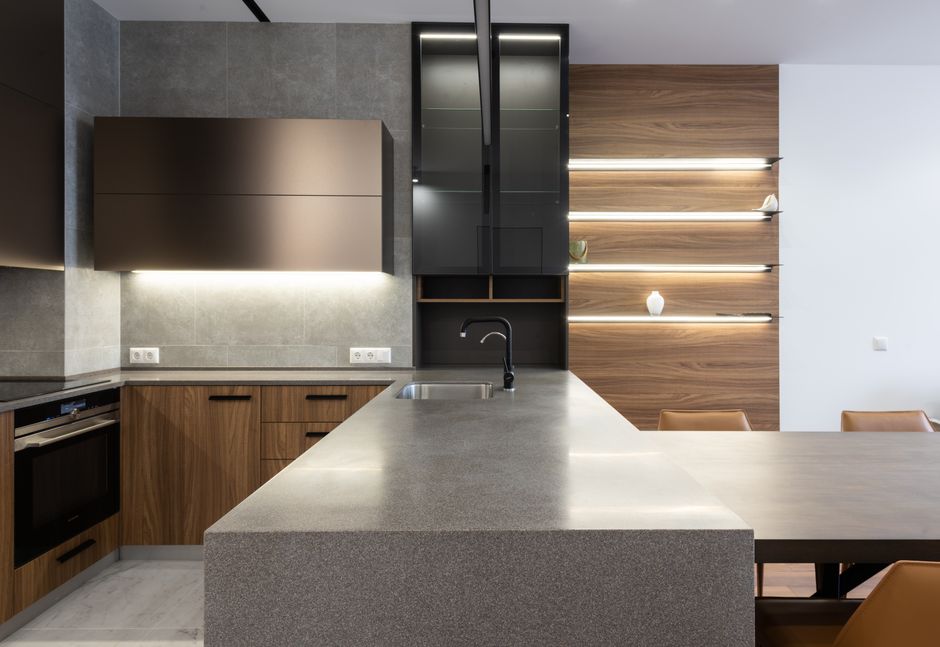
The lever arm acts as a mechanical multiplier of force: it converts a vertical weight applied at the outer edge into a rotational torque against the cabinet base. Every teardown custom countertops hendersonville nc web mergers has logged shows the same thing regarding an unstable countertop in Hendersonville, NC. A heavy slab of granite or quartz creates a significant amount of dead weight that sits outside the center of gravity of the support structure. If the distance from the cabinet face to the outer edge increases, the risk of the unit tipping forward grows exponentially.
Calculating the Moment of Force
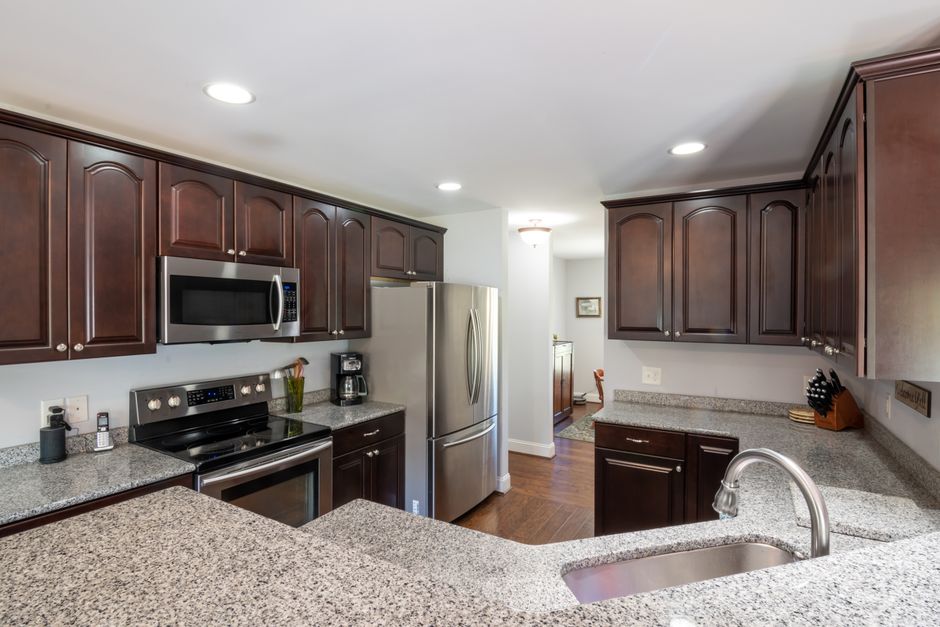
Torque is measured by multiplying the force applied by the distance from the pivot point. A person leaning on a marble edge creates a downward force at a specific distance. This force must be countered by the weight of the cabinets and the weight of the stone itself sitting over the base. When the overhang exceeds ten inches, the physics change. The weight of a thick quartzite slab helps stabilize the structure, but the downward pressure from a leaning body can easily overcome the counterweight provided by the cabinet carcass. A heavy undermount sink cutout also shifts the center of mass toward the front, which complicates the balance.
The Role of Material Density

Different materials offer different levels of resistance to tipping. A dense slab of soapstone provides more natural weight to help anchor the installation than a hollow laminate surface. While butcher block is lighter, the sheer mass of a solid surface or porcelain piece adds to the total downward load. If the template shows a large protrusion, the math dictates that the cabinets must be mechanically fastened to the floor or wall studs to prevent a catastrophic tilt. Relying on gravity alone is a mistake when the overhang distance is high.
Edge Profiles and Leverage
The shape of the edge profile does not change the physics, but it dictates where a person places their weight. A bullnose edge or an eased edge allows for a firmer grip, which can lead to more concentrated force application. If a waterfall edge is used, the weight is distributed differently, often providing more lateral stability. A mistake in seam placement can also weaken the structural integrity of the slab, making it more susceptible to cracking under the stress of a leaning load.
Structural Anchoring Requirements
Stability requires more than just a heavy stone. A small remnant used for a breakfast bar creates a concentrated point of leverage. If the distance from the pivot point to the edge is too great, the cabinet will pull away from the wall. Mechanical fasteners must be driven into the framing to ensure the cabinet remains upright. Without this, the lever arm effect turns a simple lean into a structural failure.