Quartz-resin-bonding-surface-tension

The labor hours drive the final invoice. The material yield determines the baseline, as the notes at custom countertops hendersonville nc web mergers describe. A quartz work surface in Hendersonville, NC requires specific chemistry to prevent bond failure.
Surface Tension and Resin Interaction

Engineered stone is not a natural slab. It consists of crushed quartz held together by a polymer resin. This resin creates a low energy surface that resists wetting. If the epoxy adhesive has a high surface tension, it will bead up rather than soak into the pores of the material. This lack of penetration leads to a weak seam. A successful bond requires the adhesive to break the surface tension of the resin binder within the quartz. Using a solvent to slightly swell the surface resin can help the epoxy bite into the material. This mechanical interlocking is how a seam stays tight over years of thermal expansion.
Managing the Seam Placement
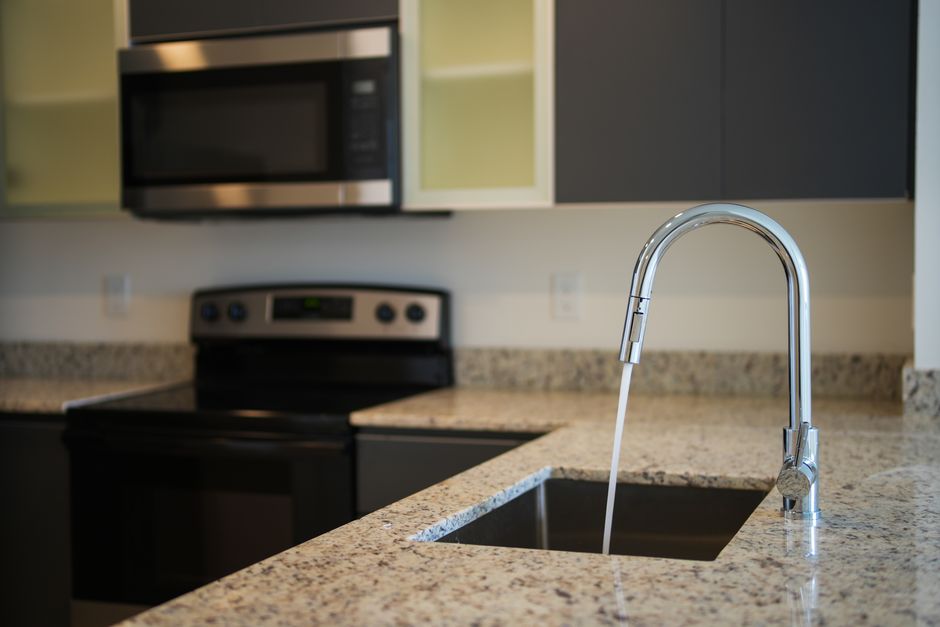
Proper seam placement avoids areas of high stress. A seam should never run through a sink cutout where the stone is thinnest. Stress from an undermount sink can cause the adhesive to shear if the bond is not perfect. The epoxy must be matched to the color of the quartz to prevent visual telegraphing. Darker resins often show more clearly if the mix ratio is off. A technician must ensure the epoxy is fully cured before any movement occurs. If the temperature in the shop in Hendersonville, NC drops too low, the cure rate slows down. This leads to a soft bond that fails under pressure.
Temperature and Viscosity Controls
Viscosity changes with the ambient air temperature. A thick epoxy will not flow into the microscopic gaps of a quartz slab. This leaves air pockets at the seam. These pockets act as failure points. Heat helps the adhesive flow, but too much heat causes the epoxy to shrink as it cures. Shrinkage pulls the two pieces of stone apart at a microscopic level. A controlled environment is needed for consistent results. The epoxy must be agitated to ensure the chemical bond is uniform throughout the entire joint.
Mechanical Preparation of the Edge
The edge profile dictates how much surface area is available for the adhesive. An eased edge provides a flat plane for the epoxy to sit against. A bullnose or a complex waterfall edge changes the physics of the joint. On a waterfall edge, the vertical and horizontal planes must meet with zero deflection. Any movement in the cabinetry will put direct tension on the seam. The bond is the only thing holding those two planes together. A clean, dry surface is mandatory. Dust from a stone cutout will contaminate the epoxy and ruin the chemical bond.